Vitamin D3: what to compare before you buy
How to read a vitamin D3 label: IU against micrograms, the stated source, tablet format and pack size.
Two units for one amount
Vitamin D is the nutrient most often printed in two units at once. One pack may lead with international units, another with micrograms, and the same pack may show both.
The conversion is fixed, so 40 IU and 1 microgram describe the same quantity. If you are comparing two packs, put them into the same unit first, otherwise the figures are not comparable at all.
The form and the source are separate lines
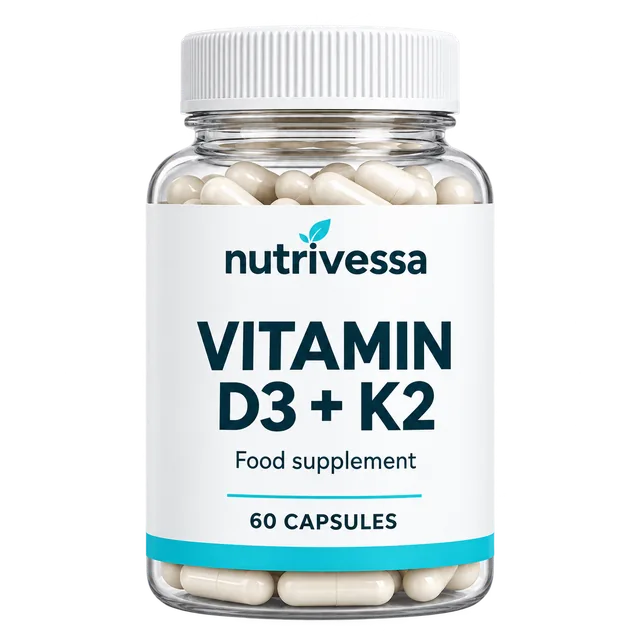
Vitamin D appears on labels as D3, named cholecalciferol, or as D2, named ergocalciferol. A pack that says only vitamin D has not told you which, and a complete label will.
Cholecalciferol is made from more than one starting material, which is why the suitability statement and the ingredients list matter rather than the nutrient name alone.
- Look for the chemical name, not just the letter and number
- Check whether the ingredients list names a carrier oil or a dry carrier
- Treat any vegan or vegetarian wording as a claim that needs verified records behind it
Tablet, capsule or softgel
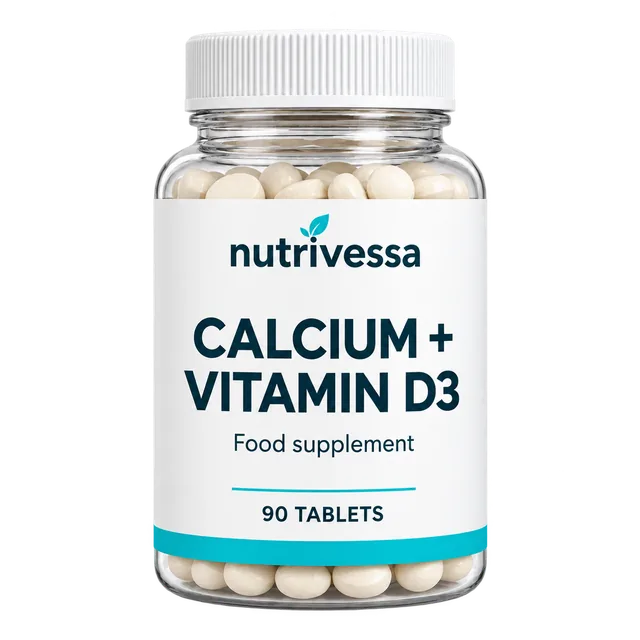
This pack is a tablet. Elsewhere you will see the same nutrient as a capsule, a softgel, a chewable or a liquid, and the format changes the ingredients list more than the panel.
Softgels carry an oil and a shell. Tablets carry binders, bulking agents and sometimes a coating. None of that is hidden, it is all on the back of the pack.
Ninety tablets is a count, not a number of portions
Nutrivessa lists this pack as 90 tablets. That is a count of units in the bottle and nothing more.
How many portions a pack holds depends on the portion printed on the label. Read that figure rather than dividing the count to work it out.
What a nutrient reference value percentage means
The percentage printed beside an amount is that amount expressed against a single fixed reference figure used for labelling across the whole market.
It is a comparison device, not a target set for you. Two packs with the same percentage are stating the same amount, which is exactly why the column is useful when you are shopping.
Compare pack with pack
The simplest price comparison is the whole pack against the whole pack, read next to its unit count and its stated nutrient amount.
A cost per day only works once you have read the portion on the label, so we do not print one here.
What the label tells you
The full ingredients list, the amount per portion, allergens, dietary suitability, directions and storage are printed on the pack.
Read the label before you take any supplement, and check the product page for the format, pack size and price before you buy.