Calcium with vitamin D3: reading a two nutrient label
Two nutrients mean two panel rows and two NRV percentages. Here is how to read each one without confusing them.
Two nutrients, two rows, two percentages
A combined label carries a separate nutrient panel row for calcium and for vitamin D3, each with its own amount per portion and its own NRV percentage.
They are read independently. A high percentage on one row says nothing about the other, and there is no combined figure to compare.
Carbonate and citrate are not the same weight of calcium
Calcium is supplied as a compound, most often calcium carbonate or calcium citrate. Carbonate carries a higher proportion of elemental calcium by weight than citrate does.
So the same elemental calcium row can require noticeably more raw material in a citrate product, which is one reason tablet size and tablet counts differ between brands.
- Ingredients list: calcium carbonate, calcium citrate or another named salt.
- Nutrient panel: calcium, as elemental calcium per portion.
- Never read a compound milligram figure as the calcium figure.
Vitamin D3 is stated in micrograms
UK nutrient panels declare vitamin D in micrograms. Some packs print an international unit figure alongside it, and the two describe the same amount in different units.
The ingredients list names the source, usually cholecalciferol. That is the line to check if dietary suitability matters to you, because the source material varies.
Tablet count against portion count
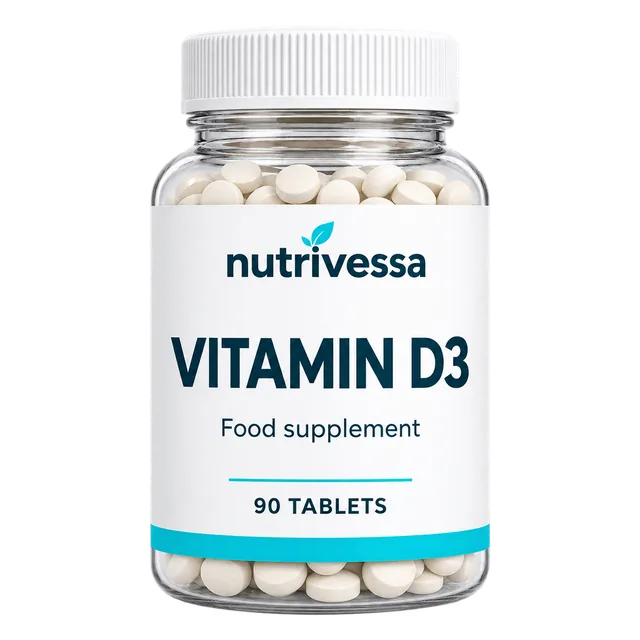
This pack is listed as 90 tablets. Combination products often state a portion of more than one tablet, which changes the portion arithmetic completely.
Read the column heading on the panel before comparing any figure. Per tablet and per portion are not interchangeable.
A short checklist for comparing
Four passes over the pack settle most comparisons.
- Find the calcium row and note the elemental amount per portion.
- Find the vitamin D3 row and note the micrograms per portion.
- Check the named compound for each nutrient in the ingredients list.
- Confirm how many tablets the portion is, then calculate cost per portion.
What the label tells you
The full ingredients list, the amount per portion, allergens, dietary suitability, directions and storage are printed on the pack.
Read the label before you take any supplement, and check the product page for the format, pack size and price before you buy.